
Networks, Wi-Fi & Connectivity
Reliable connectivity for businesses, properties, and sites where ordinary network setups are not enough.
Cyberspace Engineering designs, deploys, upgrades, and documents wired and wireless infrastructure for customers who need stable coverage, secure access, clean configuration, and long-term maintainability.
We support business networks, Wi-Fi systems, routers, firewalls, switches, access points, guest networks, structured cabling coordination, point-to-point wireless links, fiber-ready connectivity, and multi-building environments.
Connectivity problems are infrastructure problems.
Unreliable Wi-Fi, weak signal, slow business systems, dropped calls, camera interruptions, and unstable remote access often point to the same underlying issue: the network was not designed around the site’s real operating conditions.
A dependable network needs more than working internet service. It requires proper equipment placement, clean switching and routing, secure segmentation, cabling that supports the environment, appropriate firewall rules, guest access control, and documentation that makes the system maintainable after installation.
Cyberspace Engineering helps customers build network infrastructure that fits the property, supports daily operations, and can grow without becoming fragile or difficult to understand.
The goal is not just stronger signal. The goal is a network that remains reliable, secure, and supportable over time.
Network infrastructure for real operating environments.
Every site has different connectivity requirements. A small business office, rural property, hospitality site, custom residence, warehouse, school, and multi-building facility will not use the same network design.
Cyberspace Engineering plans and supports infrastructure around the property, the users, the devices, the security requirements, and the long-term maintenance model.
Wired Networks
Routers and firewalls
Managed switches
VLAN and segmentation planning
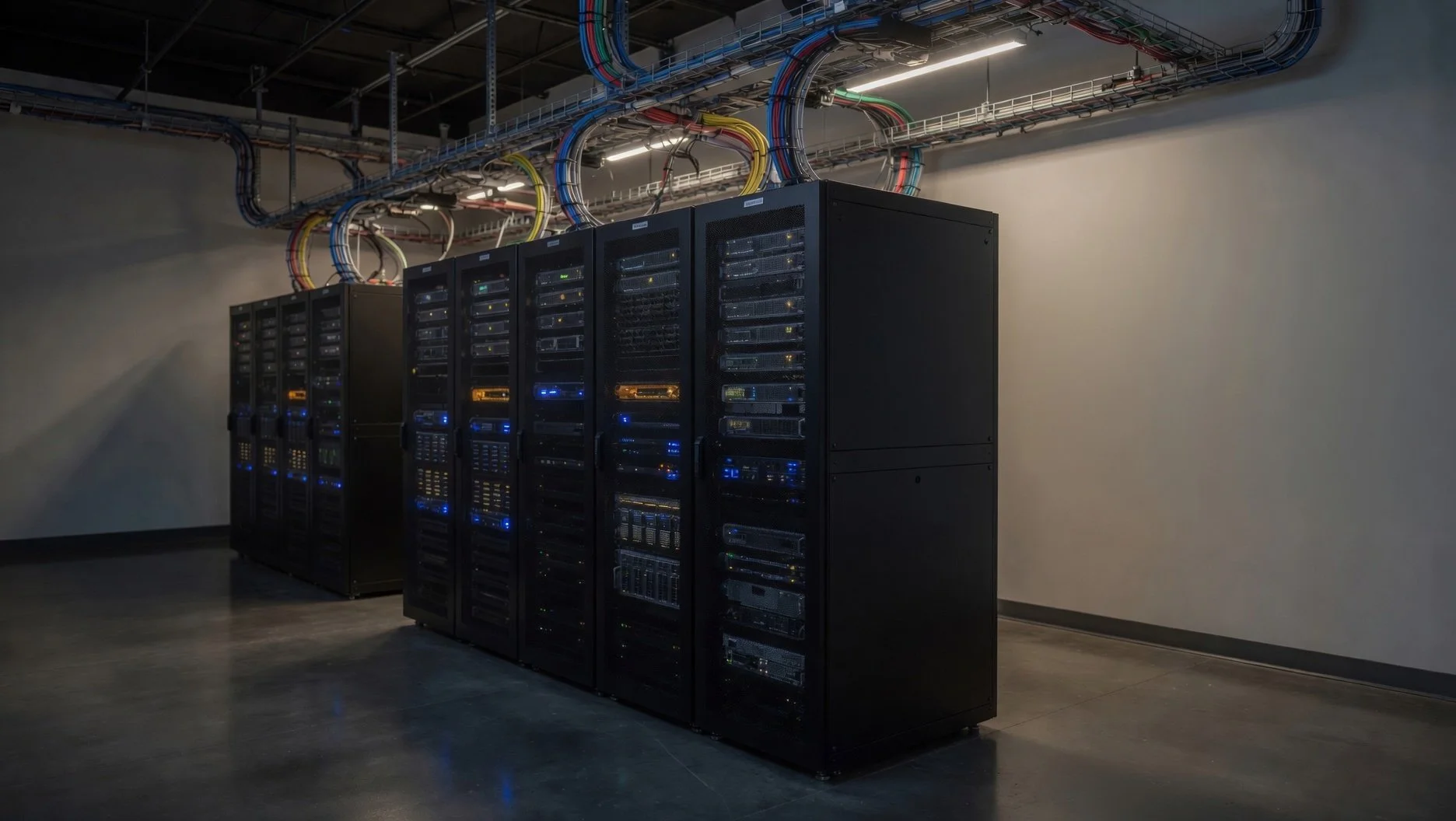
Rack and patch-panel coordination
Equipment-room organization
Network documentation
Wi-Fi Systems
Access point placement
Coverage and capacity planning
Guest and staff networks
Outdoor and multi-building Wi-Fi
Performance troubleshooting
Roaming and interference review
Connectivity & Expansion
ISP and WAN review
Fiber-ready planning
Point-to-point wireless links
Backup connectivity concepts
Remote access planning
Monitoring and support readiness
The network should fit the site instead of forcing the site to work around the network.
Designed for coverage, security, and maintainability.
A reliable network is designed as a system, not as a collection of disconnected devices. Coverage, routing, switching, cabling, firewall rules, guest access, cameras, VoIP, remote access, and documentation all affect the way the environment performs.
Cyberspace Engineering evaluates the property layout, device count, user needs, connectivity options, security requirements, and future expansion plans before recommending an architecture. The result may be simple or advanced depending on the site, but it should always be understandable, supportable, and appropriate for the customer’s operating environment.
Clean design. Clear segmentation. Documented infrastructure.
Built for sites that need more than basic connectivity.
Cyberspace Engineering supports network and Wi-Fi work in environments where reliability, coverage, documentation, and long-term support matter.
Commercial & Institutional
Small and medium-sized businesses
Hospitality and lodging properties
Schools and public-facing facilities
Clinics and professional offices
Warehouses and light industrial sites
Infrastructure-adjacent environments
Property & Field Environments
Rural and semi-rural properties
Multi-building sites
Custom residences
Builder and developer projects
Outdoor coverage areas
Retrofit and modernization projects
Each environment is reviewed according to its layout, operating requirements, connectivity constraints, and support needs.
Documented networks are easier to support.
Network work should not leave the customer dependent on guesswork. After installation, upgrade, or cleanup work, the infrastructure should be understandable to the owner, future technicians, and anyone responsible for support.
Cyberspace Engineering treats documentation as part of the network system. Depending on project scope, this may include equipment inventories, network diagrams, IP and VLAN notes, Wi-Fi configuration summaries, port and patch-panel references, access procedures, support notes, and future upgrade recommendations.
Good documentation reduces confusion, improves support quality, and protects long-term infrastructure value.
Common network and Wi-Fi questions
-
Both. We can improve existing networks and plan new infrastructure from the ground up. Many projects involve stabilizing or upgrading systems already in place through Wi-Fi redesign, firewall review, switch cleanup, segmentation, documentation, access point changes, cabling coordination, or replacement of unreliable equipment.
-
We do. Cyberspace Engineering plans Wi-Fi around coverage, capacity, roaming behavior, guest access, device density, interference, building materials, and long-term support requirements.
-
Yes. Rural properties and multi-building sites often require careful planning for ISP options, outdoor coverage, point-to-point wireless links, cabling pathways, equipment placement, weather exposure, power, and support access.
-
Where the project requires it, yes. We support structured cabling and fiber infrastructure, including planning, coordination, pathway review, rack and patch-panel layout, labeling, testing considerations, documentation, and integration into the broader network design. Where regulated trade work is required, properly qualified providers are used.
-
Of course. That is a common part of network design. Segmentation can improve security, reliability, performance, and support. Depending on the site, this may include separate VLANs, firewall rules, guest networks, camera networks, management networks, or restricted remote access.
-
Yes, as documentation is part of responsible network design. Depending on project scope, it may include equipment lists, diagrams, port references, IP and VLAN notes, Wi-Fi settings, support information, and future upgrade recommendations.
Build the network around the site.
Reliable connectivity depends on the property layout, user needs, device load, security requirements, and the way the system will be supported after installation.
Cyberspace Engineering helps customers design, upgrade, document, and maintain network infrastructure that fits real operating conditions.