
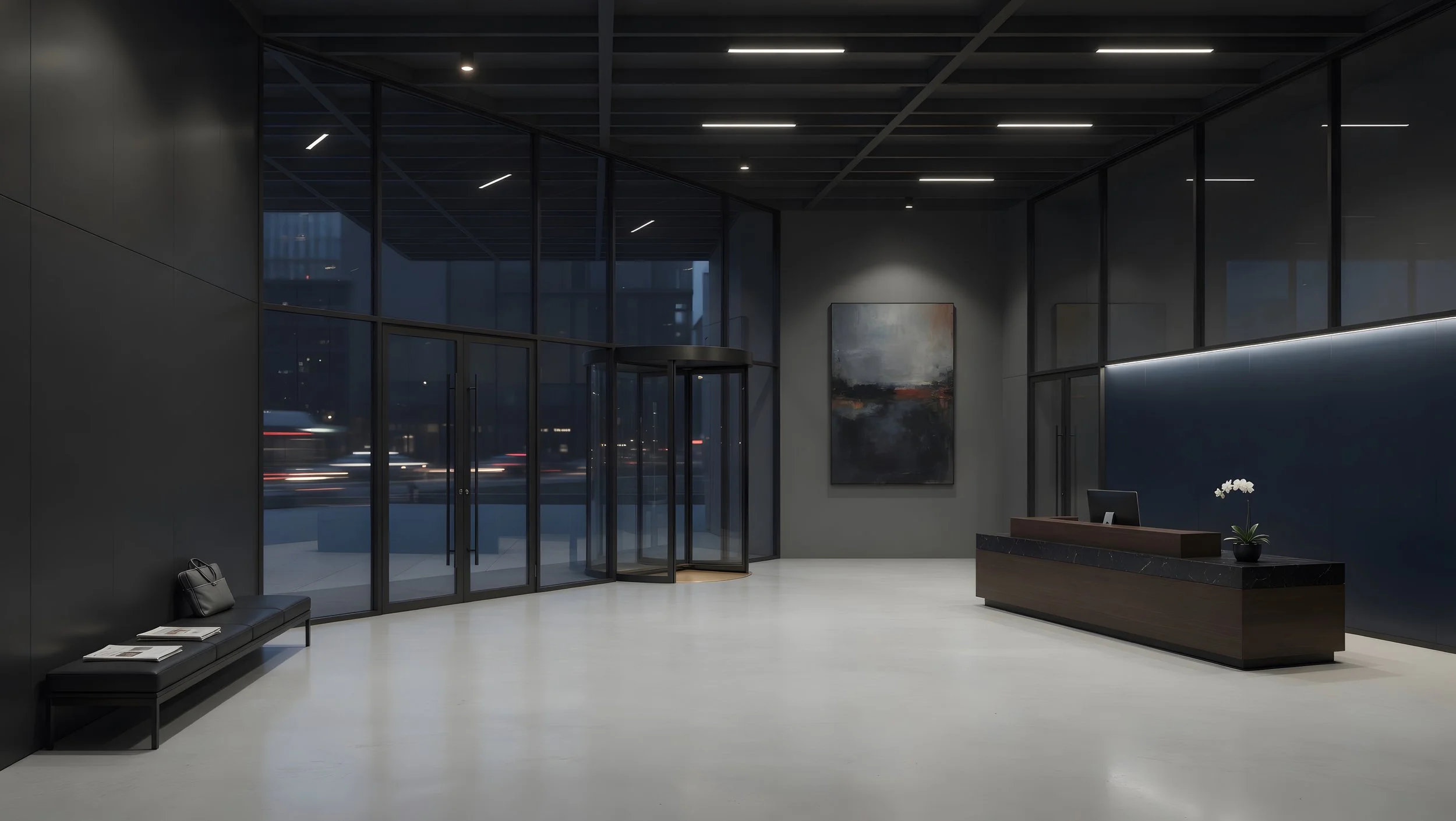
Cameras, Access & Building Technology
Integrated security, communications, and building systems planned around the property, the network, and long-term support.
Cyberspace Engineering helps businesses, property owners, builders, and organizations plan, integrate, and document camera systems, local recording environments, access-control infrastructure, VoIP communications, digital signage, and connected building technology.
We focus on practical designs that account for network reliability, privacy, system ownership, local or hybrid processing, physical site conditions, and future maintenance requirements.
Building systems depend on the infrastructure behind them.
Camera systems, access control, VoIP, signage, and smart building components are often treated as separate purchases. In practice, they depend on the same foundation: reliable networking, suitable cabling, secure access, documented configuration, power planning, and a clear support model.
When these systems are planned in isolation, the result can be difficult to maintain. Cameras may overload storage or bandwidth. Access-control equipment may be added without a clear network or credential strategy. VoIP may suffer from poor network quality. Signage and automation systems may rely on undocumented connections that become difficult to troubleshoot later.
Cyberspace Engineering helps customers plan and integrate these systems as part of the broader technology environment, so the property remains easier to operate, support, and expand over time.
The technology inside a building should be planned as infrastructure, not scattered equipment.
Connected building systems with a clear technical foundation.
Cameras, access control, communications, signage, and building technology work best when they are planned around the same infrastructure assumptions: network capacity, secure access, cabling, storage, user roles, remote management, and documentation.
Cyberspace Engineering helps customers define how these systems should fit the site before equipment is installed or expanded.
Cameras & Recording
Camera placement planning
Local and hybrid recording
Network video recorders
Storage and retention considerations
Remote-access review
Camera network segmentation
Privacy-conscious configuration
Access & Entry Systems
Access-control planning
Door and entry coordination
Intercom concepts
Credential and user-role planning
Network and power requirements
Licensed trade coordination where required
Documentation and handover planning
Building & Communications Technology
VoIP communications
Digital signage
Smart building coordination
Paging and audio concepts
Device and vendor integration
Network readiness review
Support and maintenance planning
Each system is planned around the property, the users, and the infrastructure required to keep it supportable.
Designed around privacy, ownership, and dependable operation.
Building technology often handles sensitive information: camera footage, access events, user credentials, voice communications, visitor activity, and operational data. Those systems should be planned with clear decisions about where data is stored, who can access it, how remote access is handled, and what happens if internet service is degraded.
Cyberspace Engineering favors local or hybrid processing where appropriate, especially for camera, access, and security-adjacent systems. Cloud services can be useful, but they should be selected deliberately rather than treated as the default answer for every site.
The result is a system design that considers privacy, reliability, maintenance, and long-term control from the beginning.
Not every system needs to depend on a remote cloud account to be useful, secure, or maintainable.
Practical systems for properties that need clear operation.
Cyberspace Engineering supports camera, access, communications, and building-technology planning for properties where reliability, privacy, and documentation matter.
Commercial & Public-Facing Sites
Small and medium-sized businesses
Hospitality and lodging properties
Professional offices and clinics
Schools and public facilities
Warehouses and light industrial sites
Infrastructure-adjacent environments
Residential & Property Environments
Custom residences
Multi-building properties
Builder and developer projects
Rural and semi-rural sites
Retrofit and modernization projects
Outdoor coverage and entry areas
Each property is reviewed according to its layout, network foundation, privacy requirements, access needs, and support expectations.
Documented systems are easier to operate and support.
Camera, access, communications, and building-technology systems should not become a collection of undocumented devices, passwords, apps, and vendor accounts. The customer should understand what was installed, how it connects, who can access it, and what is required to maintain it.
Cyberspace Engineering treats documentation and handover as part of responsible system integration. Depending on project scope, this may include device inventories, network notes, access-role summaries, recording and retention details, support contacts, credential handover procedures, warranty information, and future upgrade recommendations.
Clear documentation reduces operational confusion and makes future service work more reliable.
Common Building Technology Questions
-
In many cases, yes. We can review existing systems, identify documentation gaps, evaluate network and storage requirements, recommend improvements, and help plan upgrades or replacement where needed.
-
Not always. Local or hybrid recording may be more appropriate for customers who want stronger control over footage, retention, privacy, bandwidth use, and long-term operating cost. Cloud services can still be useful when they fit the project requirements.
-
Yes. These systems should usually be planned together because cameras, access-control devices, intercoms, remote access, storage, and user roles often depend on the same network, cabling, power, and security decisions.
-
Cyberspace Engineering supports planning, integration, configuration, documentation, and project coordination. Where electrical, alarm, access-control, private-security, or other regulated trade work is required, properly qualified providers are used.
-
Yes. We support VoIP communications, digital signage, paging and audio concepts, smart building coordination, network readiness review, vendor integration, and documentation for connected property systems.
-
Documentation is part of responsible system work. Depending on project scope, it may include device inventories, diagrams, network notes, access-role summaries, recording and retention details, support contacts, credential handover procedures, and future upgrade recommendations.
Plan building technology as infrastructure.
Camera, access, communications, signage, and connected building systems work best when they are planned around the property, the network, the users, and the long-term support model.
Cyberspace Engineering helps customers design, integrate, document, and maintain building technology that remains reliable, understandable, and supportable after installation.